
Kind of Blue
The real climate impact of
Sign up today to download
the full report
- Blue hydrogen and gas-CCS projects are not inherently low-carbon.
- New gas demand from CCUS will increase emissions.
- The carbon intensity of blue hydrogen is underestimated.
- Carbon savings from gas-CCS are overestimated.
- Environmental assessment frameworks are flawed.
- Gas-based CCUS projects can derail net zero strategies.
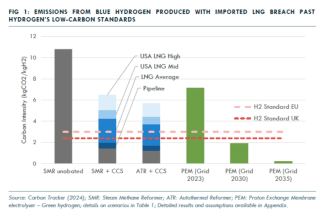 In the side bar you can find a link to our newly launched data portal with a downloadable version of the charts presented in the report.
If you have follow-up questions, please contact the author, Lorenzo Sani at lsani@carbontracker.org
In the side bar you can find a link to our newly launched data portal with a downloadable version of the charts presented in the report.
If you have follow-up questions, please contact the author, Lorenzo Sani at lsani@carbontracker.org Quotes
Carbon Tracker Associate Analyst and report author Lorenzo Sani said: “Blue hydrogen and Gas-CCS projects should not be considered low-carbon unless, on top of achieving high carbon capture rates, they can guarantee to only utilise natural gas with low upstream emissions. Green hydrogen, produced from renewable electricity, remains the only truly low-emission pathway.”
Dr Andrew Boswell who is taking the UK Government to the High Court in July over the assessment of upstream emissions in recent planning approval of Gas-CCS Projects in Teesside said: “UK Ministers promoted and subsidised these new natural gas developments whilst ignoring the very severe climate impacts. With the Net Zero Teesside project, minister Claire Coutinho even agreed that upstream emissions had significant adverse climate impacts when approving it. This report shows that the decision was made using outdated Government assumptions that do not correctly forecast future emissions, and the minister was only seeing around half the real carbon footprint. An urgent review of CCUS and hydrogen policy is required.”