
Login
Don't have a login?
Oil Companies in Disguise
Reporting gaps reveal the true carbon intensity of automotive investments
Overview
Passenger vehicles remain the largest and most durable source of global oil demand. Every internal combustion engine (ICE) or hybrid vehicle sold locks in years of future fossil fuel consumption, making automakers structural enablers of the oil system. Yet current emissions reporting frameworks systematically understate the scale of this exposure.
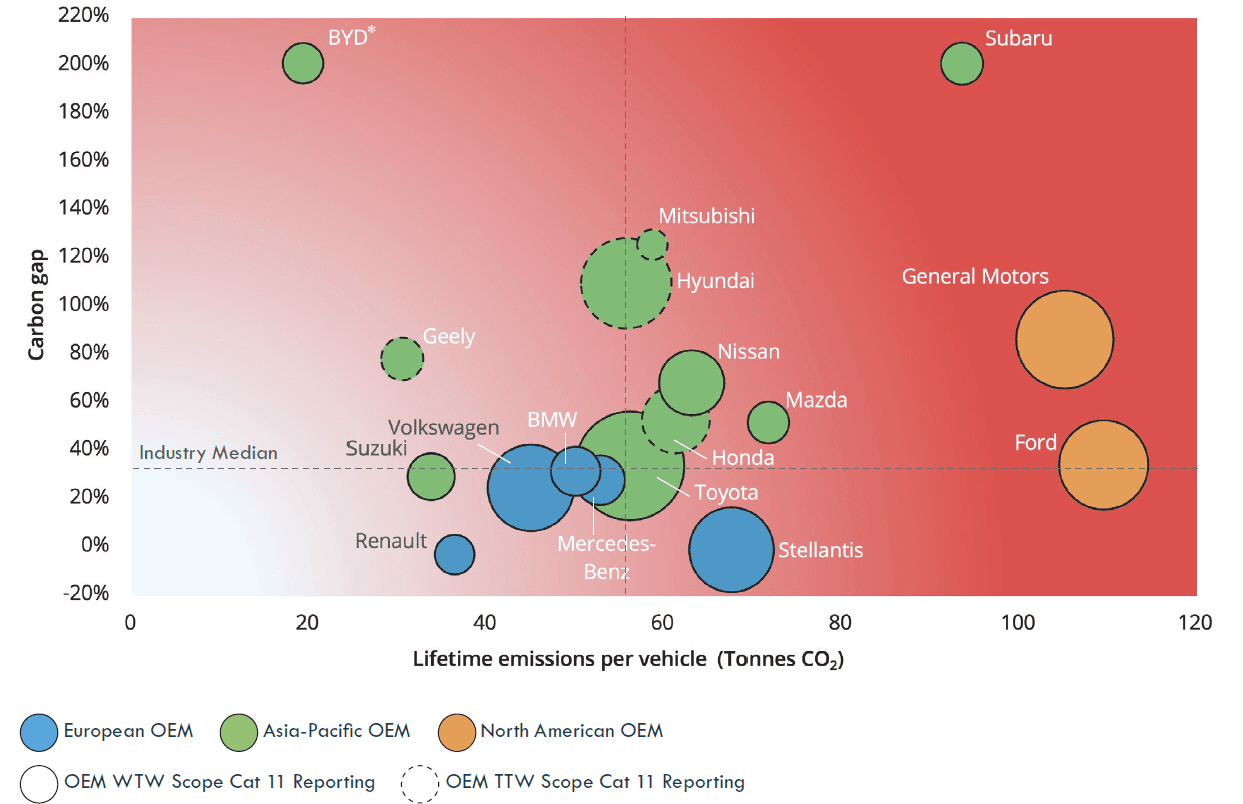
This report analyses 17 of the world’s largest automakers and identifies a systemic “Carbon Gap” between reported Scope 3 Category 11 emissions and estimated real-world lifecycle emissions. Across the sector, Carbon Tracker estimates a median reporting gap of 33%, driven by differences between corporate reporting assumptions and real-world vehicle emissions. Adjusted emissions estimates suggest several automakers are as carbon intensive as traditional oil and gas companies.
Sign up today to download
the full report
Key findings
1
Automakers are structural drivers of oil demand. Each ICE or hybrid vehicle sale locks in 10-20 years of future fuel consumption and associated emissions.
2
Scope 3 Category 11 reporting systematically understates real-world emissions exposure due to conservative mileage assumptions, unrealistic hybrid utility factors and omission of upstream fuel-production emissions.
3
Across 17 global automakers, Carbon Tracker estimates a median 2024 “Carbon Gap” of 33% between reported and estimated real-world emissions.
4
Differences in reported emissions are not solely driven by vehicle mix; disclosure assumptions and reporting methodologies also materially affect reported outcomes.
5
Hybrid-heavy transition strategies risk prolonging oil demand and increasing stranded asset exposure as markets accelerate towards full electrification.
6
BEV-focused manufacturers are structurally reducing oil exposure, while laggards remain tied to long-term fossil fuel dependency.
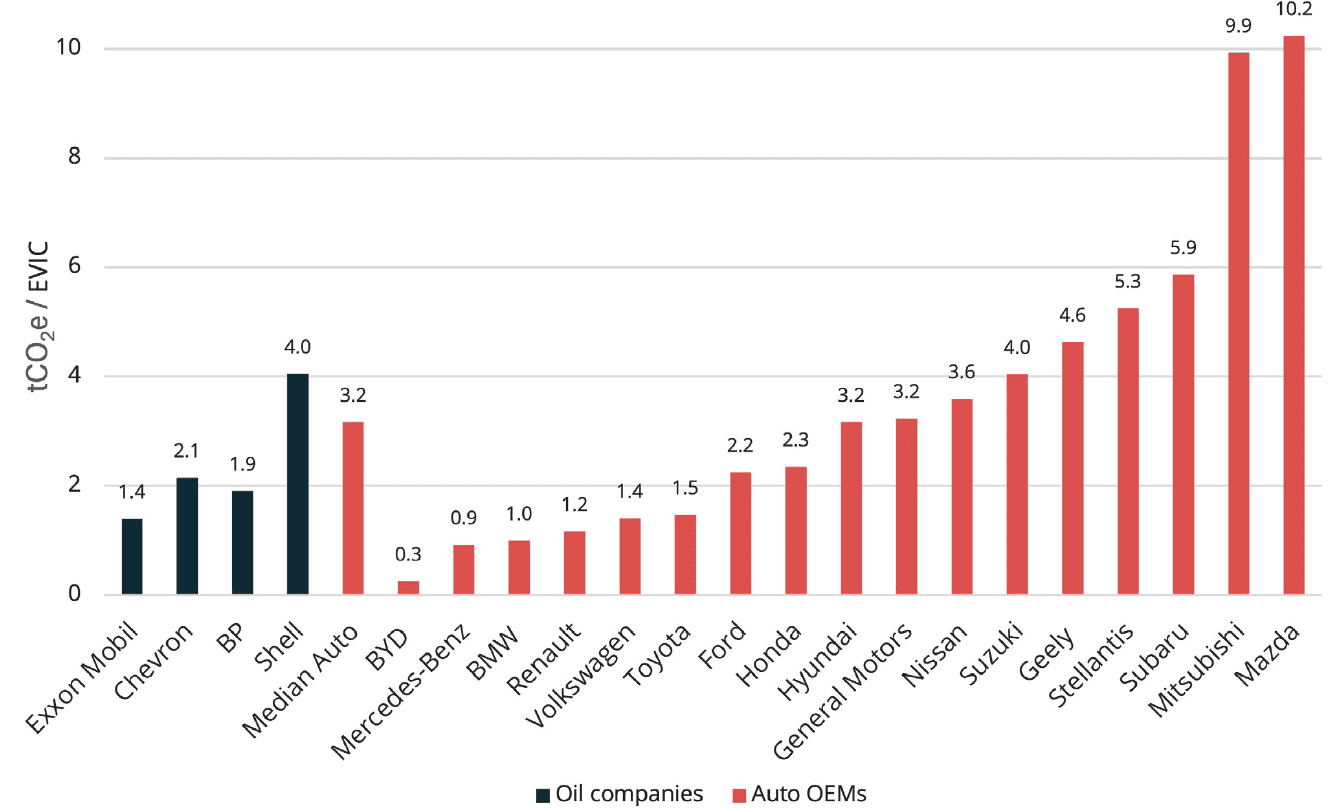
Sector value carbon intensity – oil & gas versus automotive (2024)
What the data shows
Differences between reported and estimated emissions are primarily driven by discretionary assumptions around vehicle lifetime mileage, hybrid usage and emissions accounting boundaries.
The findings suggest investors may be relying on emissions disclosures that are not directly comparable across issuers due to differing assumptions around vehicle lifetime mileage, hybrid usage and emissions boundaries. This may contribute to the underpricing of carbon exposure, stranded asset risk and future regulatory liabilities.
Carbon gap versus lifetime emissions per vehicle (2024)
Recommendations
For investors:
- Scrutinise the assumptions underpinning Scope 3 Category 11 disclosures.
- Prioritise BEV sales share as a core transition metric.
- Assess exposure to long-term ICE and hybrid dependence.
- Consider carbon intensity metrics alongside reported emissions disclosures when assessing transition risk.
For regulators and standard setters:
- Strengthen standardisation of automotive Scope 3 reporting.
- Improve transparency around vehicle lifetime and real-world emissions assumptions.
For automakers:
- Accelerate BEV deployment.
- Align emissions reporting with real-world vehicle performance.
Related resources
Additional Files
Quotes

“Automakers are the gatekeepers of future oil consumption. Passenger vehicles are the largest source (27%) of global oil demand and every ICE or hybrid vehicle sold today locks in 10-20 years of additional consumption."
Ben Scott, Head of Energy Demand, Carbon Tracker
Automakers’ flawed emissions reporting masks the reality that a dollar invested in legacy automotive firms is in many cases just as carbon intensive as a dollar invested in oil and gas.”
Ben Scott, Head of Energy Demand, Carbon Tracker
Related Reports
偽装された石油会社
排出量報告ギャップが明らかにする自動車投資の真の炭素集約度
Report | 02/06/26 | Automotive